Turbo lag is the pause performance drivers know well: you plant the throttle and the response arrives a beat late. Stellantis’ SRT division is working on a concept meant to close that gap, and it is worth understanding before the hype outpaces the engineering.
What SRT eBoost Air Actually Is
SRT eBoost Air is a concept technology, not a production model and not a feature you can order on any current Dodge, Jeep, or Ram vehicle. It is an engineering idea still moving through prototype development inside SRT, the performance and rapid-development arm of Stellantis.
The concept targets a specific, familiar complaint: laggy low-rpm turbo response. Anyone who has driven a turbocharged vehicle and felt the throttle go soft before the boost arrives knows the exact sensation SRT is trying to design out.
The Problem Eboost Air Is Built To Solve
Traditional turbocharging asks engineers to pick a size and live with the tradeoff. A larger turbocharger builds more boost at higher engine speeds but responds slower off idle. A smaller one spools quickly but runs out of breath as revs climb.
That tradeoff exists because of low-speed exhaust energy. At low engine speeds, there simply is not enough exhaust flow to spin a turbocharger’s turbine quickly, so throttle response suffers exactly when a driver expects the most immediate reaction. The result is a real-world drivability issue: the gap between pressing the pedal and feeling the acceleration follow through.
How The Concept Works, In Plain Language

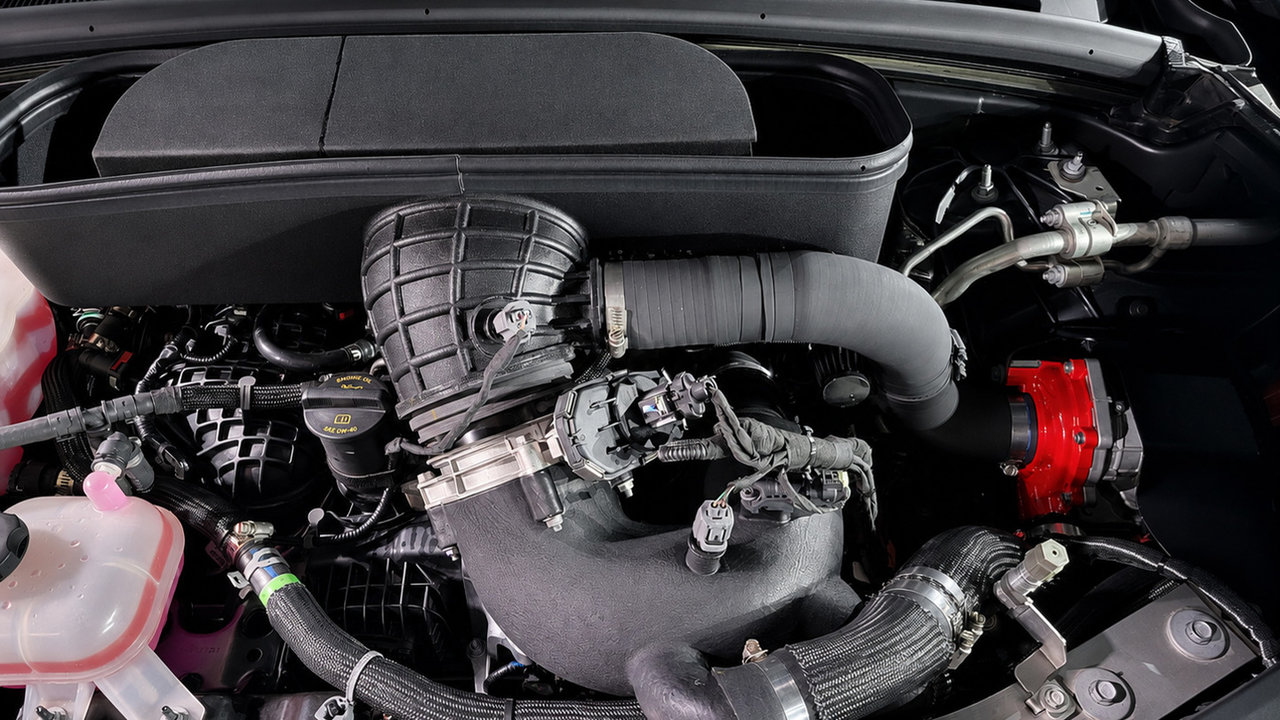
The eBoost Air concept places an electric compressor ahead of the turbochargers in the intake path. Instead of waiting for exhaust flow to spin the turbo, the electric compressor can start pressurizing intake air the moment a driver calls for it.
A bypass system routes airflow through that electric compressor when instant boost is requested, then hands off to the exhaust-driven turbochargers once they have enough energy to take over on their own. Think of it as an electric assist that pre-spools the system, followed by a handoff to conventional turbo operation as engine speed builds.
The intended result is straightforward: better throttle response and stronger low-end pull immediately off idle, followed by sustained boost as the engine speed rises through its range. In practice, SRT’s goal is a driving character that feels more linear from a stop, without the flat spot drivers associate with lag.
Why This Matters Beyond One Engine
SRT is positioned inside Stellantis as a performance and rapid-development incubator, meaning ideas like eBoost Air are meant to move quickly from concept sketch to running prototype. That pace matters more than any single application of the technology.
eBoost Air is tied to broader SRT goals around powertrain development and driver engagement, and it connects to the wider Dodge, Jeep, and Ram brand family rather than one nameplate. Stellantis frames it as part of next-generation high-performance propulsion research, with the emphasis on brand-level engineering direction rather than a specific vehicle launch.
That framing is worth repeating plainly: this is a proof of concept, not a current showroom feature. Separating the engineering step from a purchase decision keeps expectations honest.
Who Should Be Paying Attention
Performance-minded shoppers who follow powertrain technology closely are the natural audience here, particularly anyone cross-shopping turbocharged Dodge, Jeep, or Ram products and wondering where the engineering is headed next. This is early-stage research, not a spec to plan a purchase around today.
For Nova Scotia drivers who like tracking what SRT is building before it reaches a dealership floor, eBoost Air is a useful signal of direction rather than a countdown to a release date.
Following SRT’s Next Steps
SRT eBoost Air illustrates how Stellantis approaches the turbo lag problem: an electric compressor bridging the gap until exhaust-driven boost takes over, aimed at a more responsive, linear driving feel. It remains a concept moving through prototype development, not a confirmed production feature.
Contact Atlantic Dodge Chrysler Jeep in Halifax to stay current on Stellantis performance news, including how SRT’s powertrain research develops over time.